

01 Turning Ideas into Reality Through Hands-On Learning
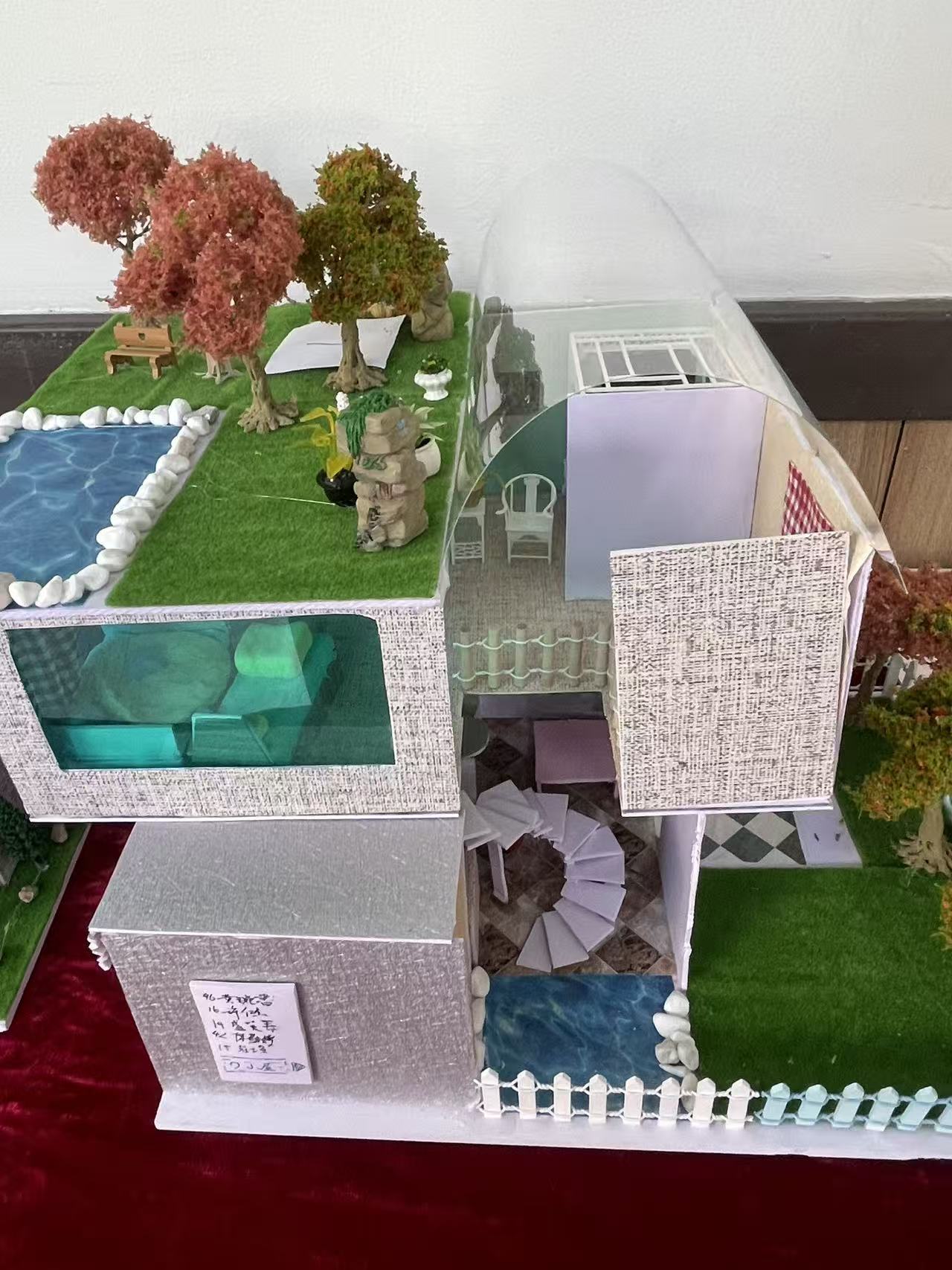
A sheet of cardboard, a few wooden sticks, and a small piece of clay—through measuring, cutting, folding, and gluing, students gradually transform their ideas into three-dimensional creations.
How can the walls stand firmly? How should the staircase be arranged? How can the courtyard space be planned effectively? Starting with these questions, students complete their work through repeated trials, adjustments, and revisions, following Huadong’s inquiry learning cycle of questioning, gathering evidence, analyzing, creating, presenting, and reflecting.
02 One Model, Four “Languages” of Learning
Huadong’s K–12 curriculum develops future-ready capabilities through the school’s Four Language Pillars: Computational Language, Academic Research Language, Intercultural Language, Design & Innovation Language.
This miniature courtyard is a learning experience in which all four languages come together.
Students use Computational Language when working with measurements, proportions, and structures. They develop Academic Research Language through observation, questioning, and problem solving. They engage with Intercultural Language when considering what makes a space comfortable and meaningful for people. Through form, color, materials, and spatial arrangement, they bring Design & Innovation Language to life.
03 From “Making” to “Expressing and Creating”
The two-story building, grass-covered rooftop, pond, trees, and seating area are more than decorative details. Each element reflects a choice and a design decision.
Students need to understand the task, communicate their ideas, read information, sketch or write down their designs, and even measure and calculate before transforming their thinking into a finished creation.
Learning therefore goes beyond listening, speaking, reading, writing, and numeracy. It moves toward the four core capabilities Huadong aims to cultivate:
To understand. To express. To create. To act.This is what Huadong’s K–12 Four Language Pillars look like in authentic learning.